Have you ever thought about the consequences when music and law combine?
At first, the worlds of law and music might seem worlds apart, as they are two very different careers with many intersecting components.
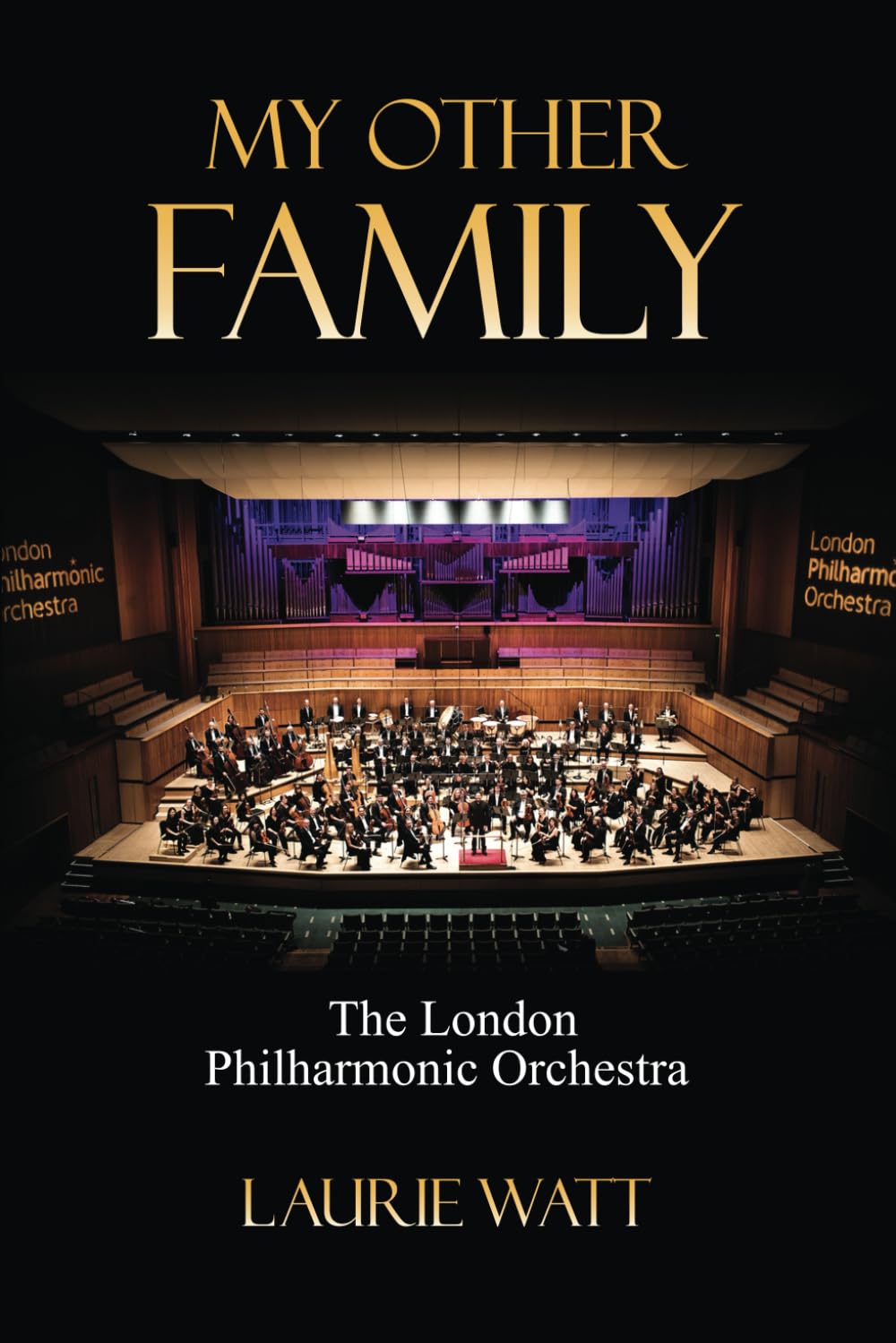
However, Laurie Watt’s memoir, My Other Family: The London Philharmonic Orchestra, proves that these two fields can come together in surprising and transformative ways. From a lawyer to a mature French horn player involved with the London Philharmonic Orchestra, this memoir highlights how legal expertise can play a role in music.
Watt was introduced to the London Philharmonic Orchestra through Patrick Garvey, a French horn player. He brought him into the Orchestra’s world at a critical juncture. In the 1970s, legal issues surrounding employment contracts necessitated expert advice, and Watt’s legal background proved invaluable, as he was able to navigate complex disputes that not only helped secure the orchestra’s stability but also demonstrated how the law could be a silent force behind artistic endeavours.
Lawyers may not be the first professionals who come to mind when we think of musicals. From drafting contracts to resolving disputes, legal professionals ensure the smooth functioning of artistic institutions, and that is what Watt’s work demonstrates. As a part of the London Philharmonic Orchestra, he extended beyond legal battles. He contributed to international tours, financial negotiations, and the Orchestra’s organisational structure. This underscores the importance of law in protecting and promoting creativity.
While completely different, both fields demand precision, collaboration, and adaptability. For example, just as a musician must master their instrument and work in harmony with an ensemble, a lawyer must master the intricacies of the law while working with clients and colleagues.
Watt’s story is particularly compelling because of the emotional resonance of his relationship with the London Philharmonic Orchestra. For Watt, the orchestra was more of a family. His legal duties weren’t merely about resolving disputes. It was also about supporting an institution he deeply admired—that, too, enriched his legal career and added depth to his understanding of music.
Watt’s story is a testament to the value of interdisciplinary approaches, where his ability to blend legal expertise with a passion for music opened doors for the Orchestra and its reputation. In his own words, “The Orchestra is a professional family in its own right and, as I say above, has a deserved reputation for not only being in the highest hierarchy of great orchestras in the world but also being one of the nicest orchestras to work for in the United Kingdom.”
Whether you’re a lawyer, musician, or someone in another field entirely, My Other Family: The London Philharmonic Orchestra serves as an inspiring example of how diverse paths can lead to unexpected and fulfilling outcomes.
In short, My Other Family is not a formal history of the London Philharmonic over this period, as Laurie Watt has restricted himself to those aspects of its life in which he became involved or even entwined and takes the reader through its 50th-anniversary celebrations and onwards into the new century, with upheavals at the South Bank, a major crisis in 2009, and right up quite close to the great pandemic that started at the end of 2019, by which time he had been invited to be an Honorary Member of the Orchestra for Life.
Grab the Hardcover Version Now: www.amazon.com/dp/1917613784 There’s More To Know! Visit Our Website Now: www.myotherfamily.co.uk